
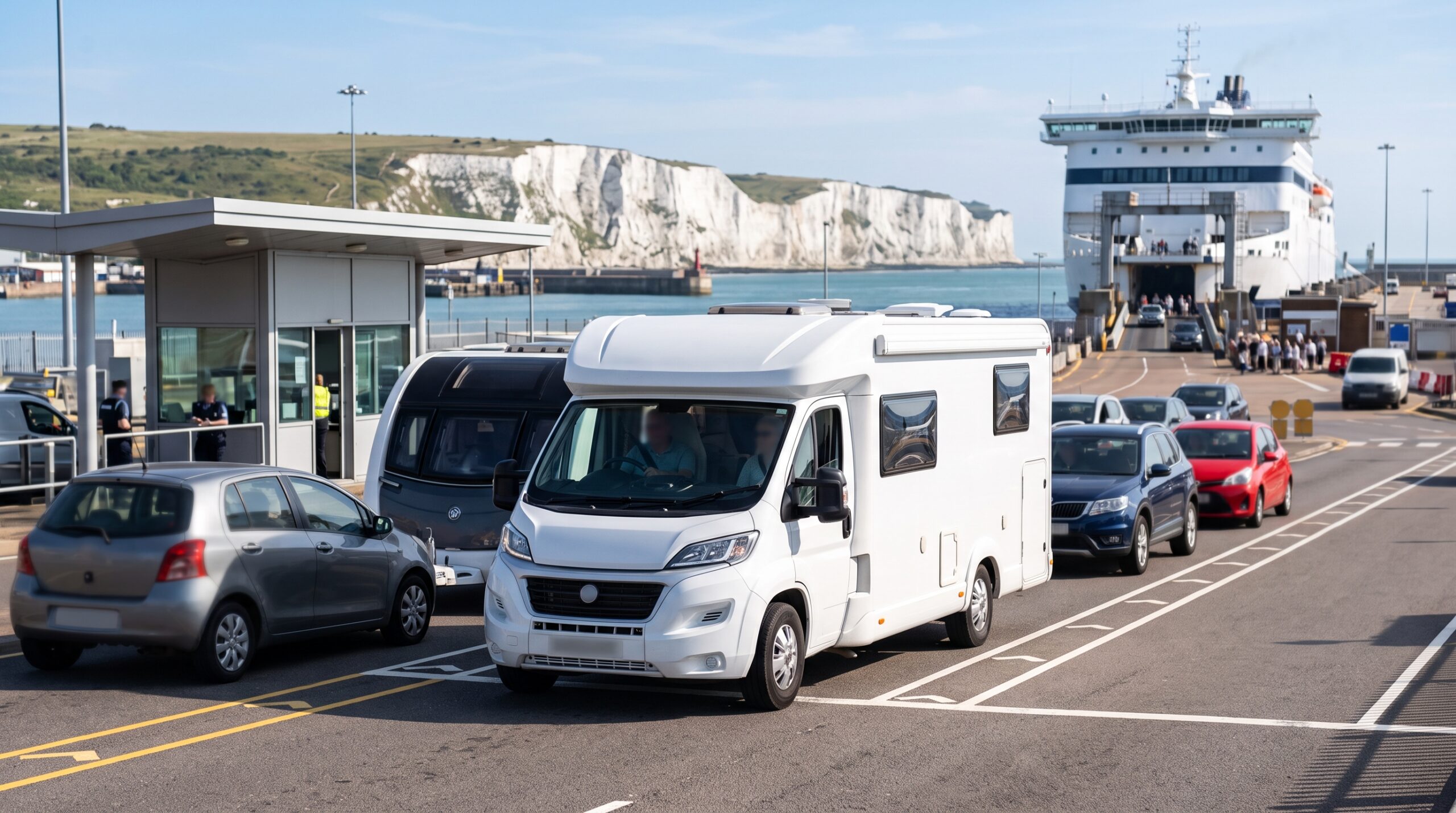
If you’re planning to take your motorhome or caravan to Europe, whether it’s a winter escape to Spain or next summer’s big tour, the border has changed. The EU’s new Entry/Exit System (EES) is now fully up and running, and a new travel permit called ETIAS is on the way. Here’s what they mean for UK tourers, in plain English.
EES: fingerprints and a photo at the border
The Entry/Exit System has been fully operational across all Schengen countries since 10 April 2026. It replaces the old passport stamps with a digital record of when you enter and leave.
- What happens: the first time you cross, you show your passport, have your photo taken and your fingerprints scanned. Children under 12 have their photo taken but aren’t fingerprinted.
- Where it happens: at EU airports, ports and land borders. If you’re crossing from Dover or on the Eurotunnel from Folkestone, the checks happen before you leave the UK, at the border control point.
- Is there a fee? No. EES registration is free.
Tip: allow extra time at the port or terminal for your first crossing under the new system, especially at busy times. Everyone in the vehicle needs to be registered.
The 90-day rule is now tracked automatically
UK visitors can still spend up to 90 days in any 180-day period in the Schengen area. The difference now is that every entry and exit is recorded electronically, so your days are counted automatically and there’s no relying on a stamp being missed.
That matters for long-stay tourers. If you like to spend the winter in Spain or Portugal, count your days carefully and plan your trip around the limit, because overstays will now be picked up.
ETIAS: a travel permit you’ll need to apply for
ETIAS (the European Travel Information and Authorisation System) is a separate online permit that UK travellers will need before visiting most EU countries. The European Commission says it is scheduled to start in the last quarter of 2026, with the exact date still to be announced.
- Cost: €20 per person. It’s free for under-18s and people aged 70 and over, although they still need one.
- How long it lasts: 3 years, or until your passport expires if that’s sooner, and it covers as many trips as you like in that time.
- How to apply: online, through the official EU website, once the system opens.
Watch out: when new travel permits launch, unofficial websites often appear charging far more than the real fee. Only ever apply through the official EU ETIAS website, and check the start date before booking any crossings for late 2026 or 2027.
Your pre-Europe checklist
- Passports: check expiry dates for everyone travelling, as an ETIAS runs out when your passport does.
- ETIAS: keep an eye out for the official launch date and apply in good time once it’s live.
- Caravan owners: check the DVLA trailer registration rules for caravans over 750kg.
- Documents: take your V5C logbook, driving licence and insurance details, and check your breakdown cover includes Europe.
- Your van: get it checked over before a long trip, a long way from home.
Get your van Europe-ready
Nothing spoils a tour like a breakdown or a leak hundreds of miles from home. Before you set off, our AWS-approved workshop in Wallsend can carry out a full habitation check, motorhome servicing and mechanical repairs, caravan servicing and tyre checks and replacements, so you can head off with peace of mind.
- Call 0191 694 1111
- WhatsApp 07943 200793
- Book online
Travel rules can change. Check the latest official guidance on GOV.UK before you travel.